
 Send Email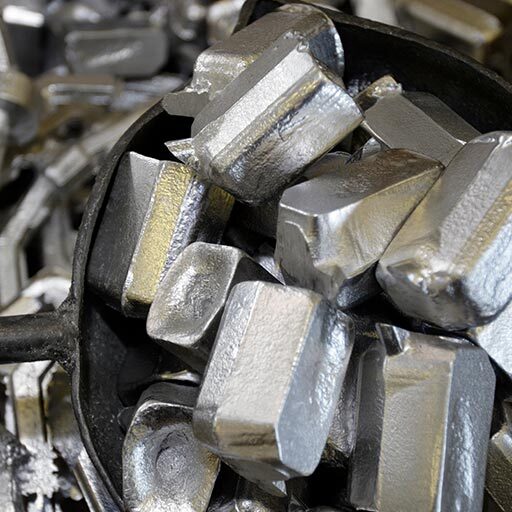
Alloyed Tin Metal
2700 INR/Kilograms
Product Details:
- Technique Hot Rolled
- Surface Treatment Galvanized
- Product Type Tin Ingots
- Alloy Yes
- Grade Alloy Grade
- Shape Square
- Application Road Construction
- Click to View more
X
Alloyed Tin Metal Price And Quantity
- 2700 INR/Kilograms
- 100 Kilograms
Alloyed Tin Metal Product Specifications
- Hot Rolled
- Galvanized
- Road Construction
- Alloy Grade
- Sliver
- Tin Ingots
- Yes
- Square
Product Description
Alloyed Tin refers to tin that has been combined with other metals to enhance its properties for specific applications. Pure tin is soft and malleable, with limited mechanical strength. By alloying tin with other metals, its characteristics such as strength, hardness, melting point, corrosion resistance, and durability can be improved. These alloys are widely used in various industries, including electronics, automotive, plumbing, and manufacturing.
Common Tin Alloys and Applications:
-
Solder Alloys
- Composition: Tin mixed with lead, silver, copper, or antimony.
- Applications: Used in electronics for joining components because of its low melting point and excellent conductivity.
- Example: Tin-lead solder.
-
Bronze
- Composition: Tin combined with copper (sometimes with added phosphorus or aluminum).
- Applications: Used in bearings, musical instruments, sculptures, and industrial parts due to its strength and resistance to wear.
-
Pewter
- Composition: Tin alloyed with antimony, copper, or bismuth.
- Applications: Commonly used in tableware, decorative items, and jewelry due to its shiny, silver-like appearance.
-
Babbitt Metal
- Composition: Tin with small amounts of antimony and copper.
- Applications: Used in bearing surfaces for machinery due to its low friction and wear-resistant properties.
-
Terne Metal
- Composition: Tin alloyed with lead.
- Applications: Historically used for coating steel to improve corrosion resistance, often in roofing and automotive fuel tanks.
-
Tin-Zinc and Tin-Copper Alloys
- Applications: Provide corrosion resistance in coatings and are used in plumbing and electronics.
Key Properties of Alloyed Tin:
- Improved Strength and Durability: Alloys enhance tin's mechanical properties.
- Low Melting Point: Makes it ideal for applications like soldering.
- Corrosion Resistance: Useful for coatings and protective layers.
- Ductility and Malleability: Allows easy shaping and forming.
- Non-toxicity (in some alloys): Suitable for food-grade applications like pewter.
Enhanced Durability for Infrastructure
Our alloyed tin metal undergoes a galvanization process and hot rolling to ensure superior longevity and structural stability. This combination significantly improves its resistance to environmental elements, making it particularly well-suited for road construction and other heavy-duty applications.
Optimized for Road Construction
Specifically designed for road construction needs, the alloyed tin metal's strength and corrosion-resistant properties help support surface layers and provide reliability. Its square shape ensures even distribution of mechanical loads during installation.
FAQ's of Alloyed Tin Metal:
Q: How is the alloyed tin metal processed for high performance?
A: The alloyed tin metal is produced using a hot rolled technique, followed by a galvanized surface treatment. This process not only enhances the metal's strength but also provides excellent resistance to rust and environmental wear, making it suitable for harsh conditions like those found in road construction.Q: What makes this tin metal suitable for road construction applications?
A: Its alloy grade composition, combined with the durability imparted by galvanization and hot rolling, delivers exceptional resistance to corrosion and mechanical stress. This reliability is crucial for maintaining the integrity of structures exposed to traffic and weather.Q: When should this alloyed tin metal be used in projects?
A: This tin metal is ideal for use at the structural reinforcement stage of road construction, particularly when longevity and protection from corrosion are necessary. It can also be employed during surface treatments to safeguard exposed surfaces.Q: Where can the alloyed tin metal be sourced from in India?
A: Our alloyed tin metal is available throughout India, provided directly by us as exporters, manufacturers, suppliers, and traders. We ensure consistent product availability and reliable delivery for nationwide projects.Q: What is the main benefit of the hot rolled and galvanized finish?
A: The hot rolled technique imparts structural robustness, while the galvanized finish adds a layer of protection against corrosion. Together, these features extend the service life of the tin metal in challenging environments.Q: How does the square shape of the tin metal contribute to its usage?
A: The square shape allows for uniform load distribution and easy integration into structural frameworks. This geometry simplifies installation and enhances the metal's adaptability in various road construction designs.Q: What are the advantages of using alloy grade tin metal over non-alloyed alternatives?
A: Alloy grade tin metal offers improved mechanical strength, increased corrosion resistance, and better performance under load. These attributes make it more reliable for demanding infrastructure projects compared to its non-alloyed counterparts.Tell us about your requirement

Price:
Quantity
Select Unit
- 50
- 100
- 200
- 250
- 500
- 1000+
Additional detail
Mobile number
Email

Other Products in 'Tin Ingots' category

Contact Details

- Gala No. 5, Sarthaak Bldg No. 6, Square Industrial Park, Tungarphata,Vasai - 401208, Maharashtra, India
- Phone : 08045800476
- Send Inquiry
SAMIR ENTERPRISES
GST : 27AAPPR2433M1Z5
 Send Inquiry
- Mr. Samir Rupani (Proprietor)
- Mobile : 08045800476
 Send Inquiry
 Send SMS

SAMIR ENTERPRISES
All Rights Reserved.(Terms of Use)
Developed and Managed by Infocom Network Private Limited.
Developed and Managed by Infocom Network Private Limited.


 English
 Spanish
 French
 German
 Italian
 Chinese (Simplified)
 Japanese
 Korean
 Arabic
 Portuguese